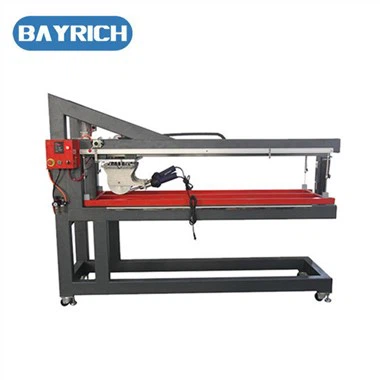
Rubber Belt Slitting Machine
Rubber conveyor belt slitting machine is a specialized equipment used for precise cutting of rubber conveyor belts, widely used in the processing and maintenance of conveyor belts in industries such as mining, ports, metallurgy, and building materials.
Description
Bayrich Rubber belt slitting machine
Rubber conveyor belt slitting machine is a mechanical equipment used to cut rubber conveyor belts into the required size, and is widely used in the production and processing of rubber products.
Rubber conveyor belts are commonly used in industries such as mining, ports, metallurgy, and building materials. Common types include ordinary rubber sheets (without sail lines) and heat-resistant rubber sheets (three-layer and four layer sail lines), which are usually semi-finished products in rolls and require secondary processing and production according to specific needs. The traditional method of relying on manual use of curve saws for segmentation is inefficient, labor-intensive, and the incision is not straight enough or has size errors. Therefore, rubber conveyor belt cutting machines have emerged, which can effectively improve production efficiency and product quality.
Typical Application Scenarios
-* * Customized processing * *: Cut conveyor belts of different lengths as needed.
-Production line integration: Collaborate with vulcanizing machines and finger punching machines to complete the splicing of conveyor belts.
Bayrich rubber conveyor belt slitting machine:
Structure and Power:
The entire equipment is divided into upper and lower cutting discs, and power is transmitted through a mixture of sprockets and gears. There are a total of 6 sets of upper and lower cutting discs, which are positioned by double key slots and locked with screws. The distance between the cutting discs can be adjusted according to actual needs for cutting.
Cutting parameters: Cut into strips with a width range of 40mm to 2000mm, with a precision of 0.5mm for strip width, a cutting thickness of 1mm to 15mm, and a maximum cutting length of the entire conveyor belt.
Operation and advantages: After adjusting the distance between the cutter heads, the operator can turn on the equipment and simply feed the conveyor belt into the equipment's clamping roller to complete the operation, followed by sorting and dividing the materials. The single disc can divide the conveyor belt into sections of 12m per minute, effectively reducing the labor intensity of workers and improving product quality and production efficiency.
Equipment Classification
1. * * Manual cutting machine**
-Suitable for small repairs or low-frequency cutting, relying on manual operation, with low cost but low accuracy and efficiency.
2. * * Semi automatic cutting machine**
-Combining manual feeding and electric cutting, suitable for medium scale production.
3. * * Fully automatic cutting machine**
-Adopting a CNC control system, automatic feeding, positioning, and cutting are suitable for large-scale high-precision requirements.
Core Structure and Function
1. * * Cutting system**
-* * Tool Type * *: Disc Knife
-Drive mode: electric, hydraulic or pneumatic, ensuring stable cutting force.
2. * * Positioning and clamping device**
-The conveyor belt is fixed using pneumatic/mechanical clamping to prevent displacement; Ruler or laser assisted positioning.
3. * * Control System**
-Semi-automatic
4. * * Security Protection**
-Emergency stop button, in compliance with safety production standards.
Key Parameters for Selection
1. * * Cutting ability**
-The maximum cutting width (such as 1000mm~3000mm) and thickness (usually 1mm~12mm).
Customization is available for sizes over 12mm
2. * * Cutting accuracy**
-The error of fully automatic models can be controlled within ± 0.5mm.
3. * * Power demand**
-Select power supply (220V/380V) or compressed air (0.6~0.8MPa) according to the type of tool.
Precautions for Operation
Preliminary preparations:
Check whether there are any abnormal phenomena in various parts of the rubber slitting machine, such as oil leakage, looseness, etc., to ensure the normal operation of the machine.
Check the sharpness of the blade. If the blade is dull, it needs to be replaced in a timely manner.
Clean the workbench to ensure there are no debris.
Turn on the power of the rubber slitting machine and observe the operation of the electrical equipment to ensure normal operation.
Precautions for Operation
Adjust the feeding roller: Open the feeding roller and place the rubber to be cut on it; Adjust the height of the roller shaft and the gap between the roller surface and the blade to ensure that the rubber can pass smoothly during cutting; Adjust the speed of the roller shaft to meet the cutting requirements of different materials.
Running the rubber slitting machine: Press the start button to start the rubber slitting machine; Observe the cutting effect, and if any abnormal situation is found, stop the machine for maintenance in a timely manner; Regularly clean cutting waste and keep the workbench clean.
Precautions for Operation
1. * * Tool maintenance * *:
Regularly polish or replace the tool to avoid rough edges on the incision.
2. * * Material adaptation * *:
Adjust cutting parameters (such as speed, tool) to adapt to different rubber hardness.
3. * * Safe operation * *:
Ensure clamping before starting cutting, and do not approach the blade with bare hands.

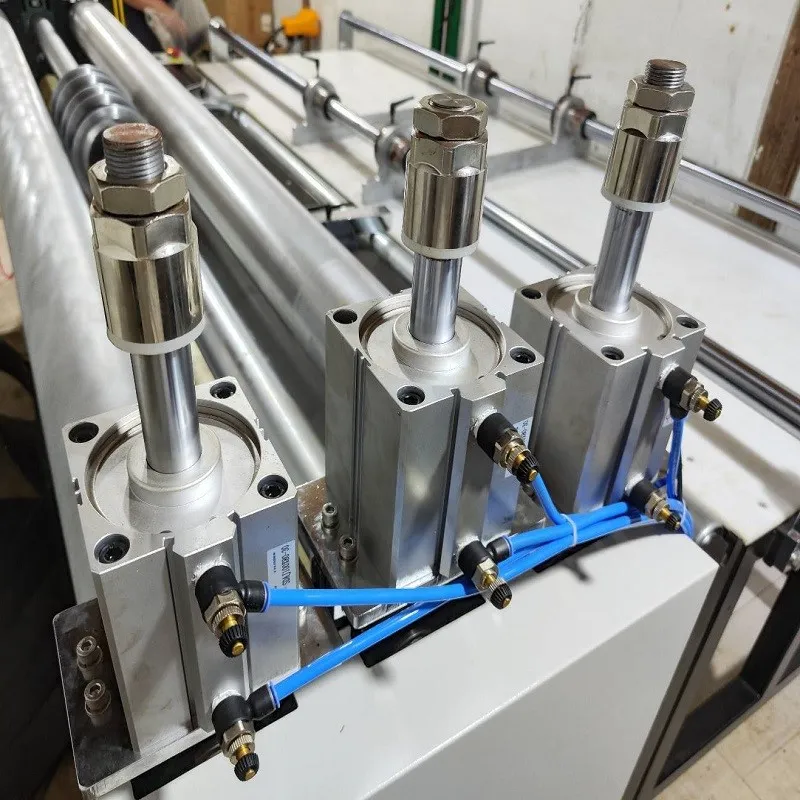

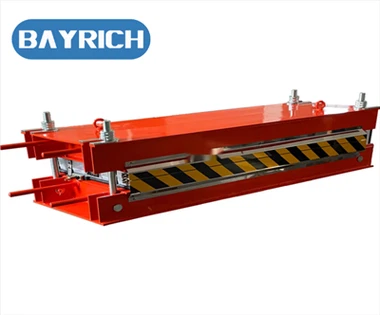
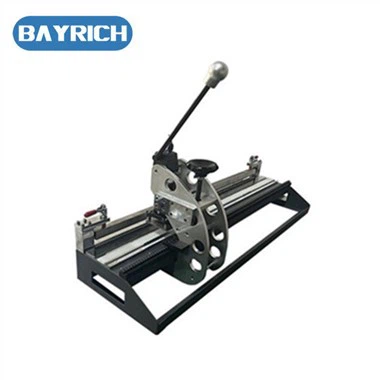
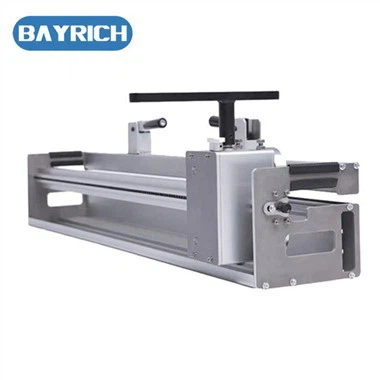
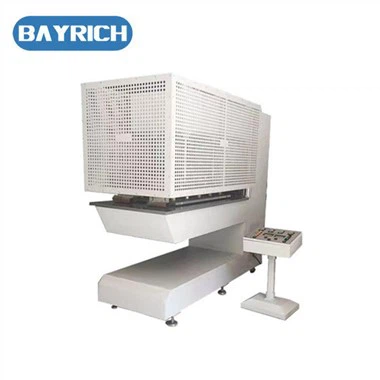
rubber conveyor belt slitting machine picture
For slitting rubber conveyor belt thickness under 12mm
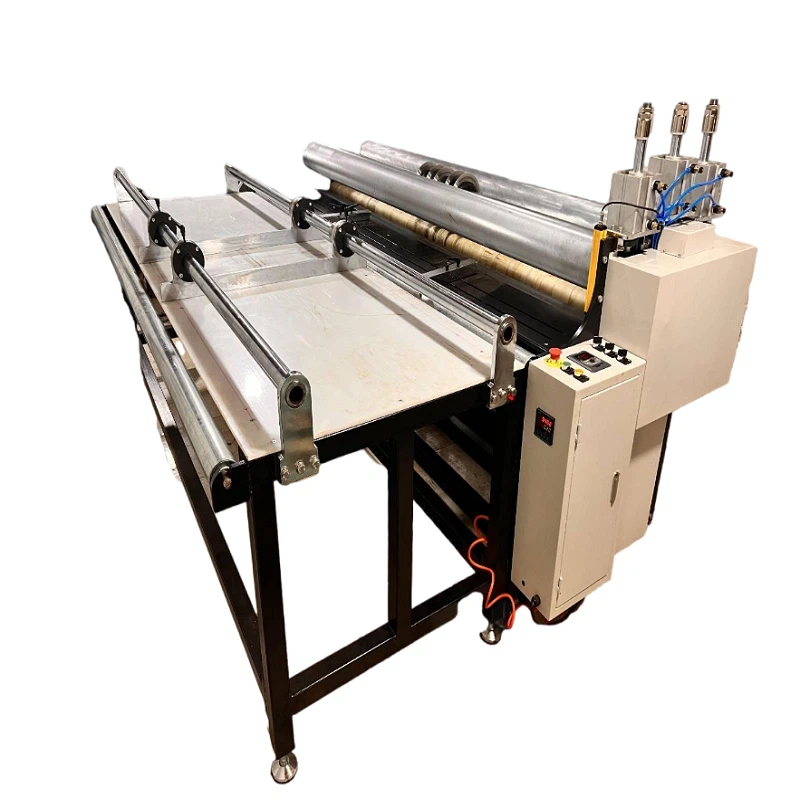
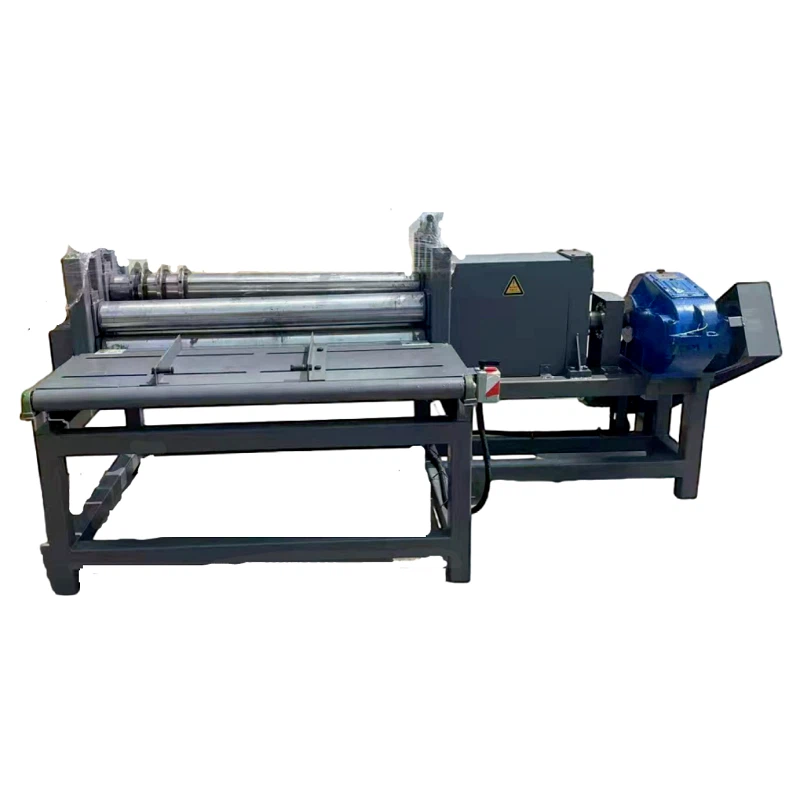
For slitting rubber conveyor belt thickness between12-25m
Hot Tags: rubber belt slitting machine, China rubber belt slitting machine manufacturers, suppliers, factory, Ply Separator, conveyor belt splicer, PU PVC cleat welding machine, portable conveyor belt vulcanizing machine, conveyor belt sealer, fastnener mechanical machine