

endless timing belt splicing/jointing/connecting/fabrication procedure
Finger Joint/Hot Melting
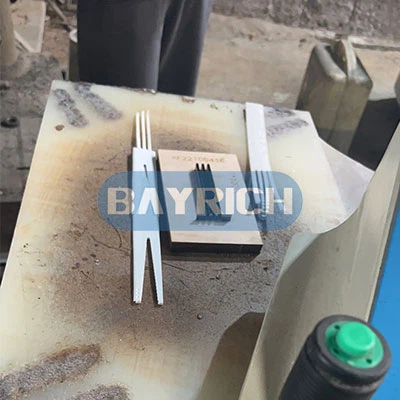
Step 1 :Finger Cutting
By Bayrich timing belt finger cutting machine

Step 2:hot press/melting
By Bayrich timing belt hot press splicing jointing machine
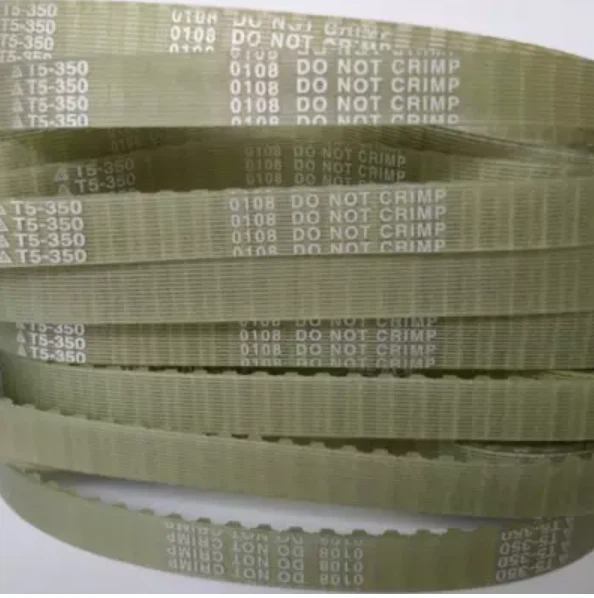
Cutting/slitting(if needed)
By Bayrich timing belt cutting/slitting machine

Grooving/perforating(ig needed)
By Bayrich timing belt grooving/perforating machine
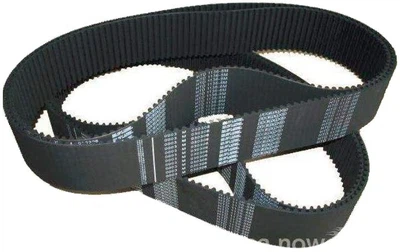
logo Prining
By Bayrich timing belt logo printing Machine

APL PU Form Coating
By Bayrich timing belt coating machine
-

Timing Belt Cleat Welding Machine
Bayrich Belt Fabrication Equipment-Timing Belt Cleat Welding Machine
Add to Inquiry -
High Performance-price Ratio Timing Belt Slitter
Bayrich TS timing belt slitter -Timing Belt Slitting Machines | High-Speed & Automated Solutions
Add to Inquiry -
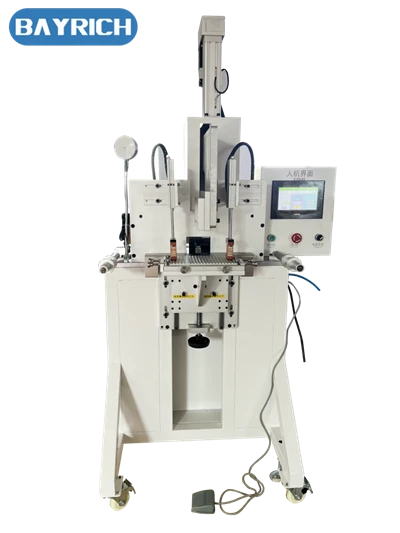
Bayrich timing belt joint machine is for an endless splice of PU timing belt.
Add to Inquiry -
Bayrich timing belt slitting machine is a cutting equipment for Longitudinal slitting endless timing belt, conveyor belt and flat belt sleeves into required width.. The cutting speed can be adjusted.
Add to Inquiry -
Timing Belt Finger Cutting Machine
Bayrich timing belt finger cutting machine is one of the equipment for stamping out fingers before preparation a Polyurethane timing belt hot press joint work.. The impact force generated by it makes
Add to Inquiry -
Timing Belt Hole and Groove Making Machine
Bayrich timing belt hole and groove making machine is using for make holes and grooves on a timing belt.. To make holes and grooves on a timing belt usually have below functions:. 1. Air suction
Add to Inquiry -
Timing Belt Surface and Edge Grinding Machine
Bayrich full-automatic timing belt grinding machine are using for fine grinding timing belt both edges (width ) and surfaces (thickness).. Although the base of timing belt is polyurethane or
Add to Inquiry


What is a timing belt?
Timing belt is endless-shaped belt made of steel wire rope or fiberglass as a strong layer, covered with polyurethane or chloroprene rubber on the outside. The inner circumference of the belt is made into a toothed shape, which meshes with the toothed belt wheel for transmission. During the transmission process, there is no corresponding sliding between the belt and pulley, and the transmission ratio is precise and constant, reaching a maximum of 10 indicators; High transmission efficiency, up to 98%; The belt line speed can reach 40 m/s. At present, timing belts have been widely used in various transmission systems.
Timing belt classification/
Divided by material
Rubber timing belt (-20-90 ℃): Good water resistance, high temperature resistance, widely used, with a large number of molds in the range of 500-3000mm.
Polyurethane timing belt (0-80 ℃): Good oil resistance, high wear resistance, small permanent deformation, high cleanliness, and can be connected for use.
Divided by tooth profile
Trapezoidal teeth: Through meshing transmission, the transmission ratio is accurate, the shaft pressure is small, the structure is compact, and the oil resistance and wear resistance are good.
Circular arc teeth: When working, the stress concentration at the tooth root is small, which can prevent interference between the teeth during meshing, and has a large load-bearing capacity, low noise, and high transmission power.
Characteristics of timing belt/
The unique structure allows the teeth of the timing belt and the timing belt wheel to mesh well, thereby enabling the timing belt transmission mechanism to have a precise and constant transmission ratio.Timing belts have high tensile strength, low energy consumption, and high efficiency, making them suitable for high-power transmission.
Compared with chain drive, timing belts do not require significant tension and have a smaller axle load; Constant transmission ratio without slipping; Extremely low elongation; The advantages of small tension adjustment distance, even without tension adjustment, compact structure, and the ability to achieve larger transmission ratios.
Unlike other transmission structures, timing belts are quieter in transmission and do not cause noise pollution.
Application of timing belt/
The timing belt has the advantages of accurate transmission, stability, high efficiency, convenient maintenance, and can be designed with different blocking blocks according to the transmission product and installation situation, as well as convenient and simple coordination. Widely used in the mechanical transmission of 3C and lithium battery industries.
Selection of timing belt/
1. Choose the appropriate material for the timing belt based on the working environment and temperature
2. Select the corresponding tooth profile based on parameters such as power and speed used
3. Calculate the circumference of the timing belt based on the matching belt pulley and installation position
4. Choose timing bandwidth based on load conditions and empirical values
Installing timing belts/
When installing the timing belt, if the center distance of the two pulleys can be moved, the center distance of the pulleys must be shortened first. After installing the timing belt, the center distance can be reset. If there is a tensioning wheel, first loosen the tensioning wheel, then install the synchronous belt, and then install the tensioning wheel.
Installing timing belts/
When installing the timing belt on the pulley, be sure not to exert too much force or use a screwdriver to forcefully pry the timing belt to prevent the tensile layer in the timing belt from breaking imperceptibly. When designing pulleys, it is best to choose a structure where two shafts can move closer to each other. If the structure does not allow it, it is best to install the timing belt and pulleys together on the corresponding shafts
In timing belt transmission, the parallelism of the axis of the two pulleys is required to be relatively high, otherwise the timing belt may deviate or even jump out of the pulleys during operation. The non parallel axis will also cause uneven pressure, leading to early wear of the belt teeth.
Control the appropriate initial tension.
The production process and processing of timing belts
PU synchronous belt production model:
T5, T10, T20, XL, L, H, XH, AT5, AT10, AT15, AT20, 3M, 5M, 8M, 14M, 20M, S5M, S8M, S14M, RPP5M, RPP8M, RPP14M, P1, P2, P3, P4, BAT10, BAT20, various double-sided tooth series, various series with V guide
PU timing belt production process
① Replace the appropriate steel wire rope (wire rope frame) according to different models of timing belt products
② Cable arrangement (tension and cable arrangement machine)
③ Replace suitable production molds (forming machine and extrusion equipment)
④ Length calculation system (automatic length calculation)
⑤ Trimming (Trimming machine)
⑥ Slitting (automatic slitting machine)
⑦ Roll up (roll up machine).
How to make the timing belt into an endless shape
①Cut the actual width and length of the open belt according to the model (slitting machine, cutting machine)
② Then finger punching (finger punching machine)
③ Fix the joint position in a psuitable mold and place it into the connection machine for fluidization molding (timing belt connection machine)
④ Excess adhesive edges on both sides of the mold after demolding (edge grinder)
⑤ Quality inspection
⑥ Inkjet printer
⑦ Packaging.
If other processing is required, then do other special processing .
seamless PU timing belt production process:
① Winding according to the required specifications (winding machine)
② Cable tensioning (tensioning machine)
③ Extrusion molding system (extruder, molding machine)
④ Closing position processing
⑤ Grinding back (automatic polishing machine)
⑥ Edge grinding (edge grinding machine)
⑦ Slitting machine
⑧ Quality inspection
⑨ Packaging
If other processing is required, then do other special processing.
Connection of timing belt
This method is suitable for the connection of timing belts and wheel hubs. Firstly, ensure that the interface is clean, free of dirt and grease. Then, insert the head of the timing belt into the wheel hub, place it on the welding workbench, and adjust it to the normal position. Use appropriate welding equipment for welding, and weld each welding point for about 10 seconds to ensure a tight fit between the hub and the synchronous belt. After welding is completed, check if the connection is secure.
This method first needs to ensure that the interface between the timing belt and the wheel hub is consistent. Clean the surface dirt and grease before assembly. Insert the timing belt axially into the hub groove and perform wheel alignment. Slide the matching shaft sleeve, connect with the shaft, and maintain a reasonable clearance. Adjust the fastening screws to ensure a tight fit of the timing belt and a smooth track.
For example, using rivets, bolts, or other special connectors to tightly connect the synchronous belt and wheel hub. Ensure that the connectors are installed correctly and check if the fasteners are secure.Steel buckle joint. This is a detachable joint method that can effectively avoid inconvenience during subsequent installation. But it is not easy to clean, easy to breed bacteria, and has a short service life.
This is a common joint method suitable for timing belts. After high-temperature heating and fusion by the hot press machine, the joint is uniformly stressed, and the strength reaches about 90% of the rated tensile strength.
Used when the machine is inconvenient to disassemble. Made by special polishing treatment and adhesive bonding, the strength reaches about 75% of the rated tensile strength.
In addition, there is a method of using polymer solvent adhesive for connection, which is suitable for timing belt connection in specific situations. Overall, the choice of connection method depends on the specific application scenario and requirements.
Hot press melt joint for polyurethane timing belt
Polyurethane timing belt is composed of polyurethane as the belt body and steel wire core as a strong layer, mostly formed by connecting. The connection of polyurethane timing belts is mostly completed by finger joint, which is the joint at both ends of the prefabricated timing belt, including steel wire and belt body.

How to joint
cut out the required belt length in advance, and then cut out the connecting ports at both ends of the belt, that is, make convex and concave finger on both sides of the belt by a finger punching machine , and match them together.
After being heated at high temperature, the connection port is fused into a circular whole.
If the hot melt is not sufficient ,will result in the minimum tensile strength at the joint and leaving a quality hazard. It is easy to break here during use, reducing the service life of the timing belt.
The connecting timing belt is prone to breakage at the joint under high load conditions. In addition, connecting timing belts can also lead to improper cutting length and misalignment of teeth.The matching situation causes unnecessary waste, which not only affects transmission efficiency but also increases manufacturing costs.
So, it is crucial to choose good equipment to connect the timing belt. We Wenzhou Bayrich safety equipment co., ltd can help you on this.
As one of the leading timing belt machine manufacturers and suppliers in China, we warmly welcome you to buy discount timing belt machine for sale here from our factory. All our products are with high quality and competitive price.
Timing belt skiving machine, timing belt hole drilling machine, semi auto timing belt cutter