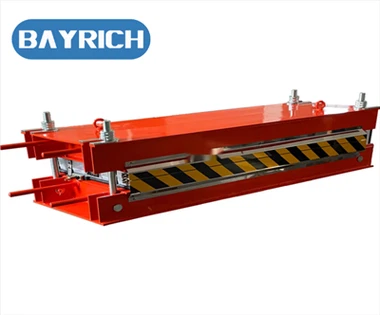
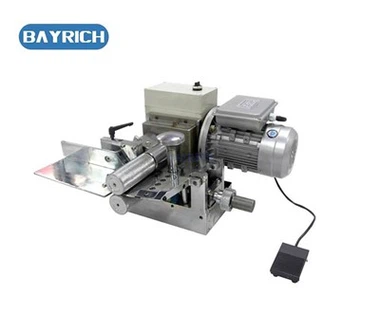
Common Causes of Conveyor Belt Splicing ends Breakage
Sep 10, 2026
Common Causes of Conveyor Belt Breakage
Conveyor belt breakage is one of the most disruptive failures in material handling systems. Industry data shows that after ruling out product defects, over 85% of belt failures are caused by operating conditions, improper installation, or poor maintenance. Below are the key causes and corresponding preventive measures.
1. Choice of Splicing Method
The splice is inherently the weakest point on a conveyor belt. Different splicing methods achieve significantly different joint strength retention rates:
|
Splicing Method |
Joint Strength vs. Original Belt |
Characteristics |
|
Hot Vulcanization |
80% |
Highest strength; requires press, trained operator, controlled cure |
|
Cold Bonding |
60% |
Moderate strength; dependent on workmanship and adhesive quality |
|
Mechanical Fasteners |
40% |
Fastest to install; lowest strength; risk of leakage and fastener pull-out |
Selecting the appropriate method based on belt type, tension rating, pulley diameters, and operating conditions is critical. Using an unsuitable method is a fundamental cause of premature splice failure.
2. Splicing Process Deficiencies
When using hot vulcanized splicing, the following process parameters must be strictly controlled:
Pressure: Insufficient pressure results in poor inter-ply adhesion and weak bonding.
Temperature: Too low prevents proper curing; too high causes over-curing and rubber degradation.
Holding Time: Inadequate cure time leaves the joint under-vulcanized; excessive time degrades the rubber compound.
Additional process defects that weaken joints:
Operational damage: Cutting or grinding into the fabric plies or steel cords during splice preparation directly compromises reinforcement integrity.
Insufficient overlap length or step count: Reduces effective bonding area, preventing the joint from withstanding working tension.
Deteriorated bonding materials: Using expired, self-vulcanized, or improperly stored rubber compounds significantly reduces adhesive strength.
Missing sealing gum or incorrect splice direction: Can cause edge cracking and cover rubber separation, especially at the splice.
3. Uneven or Excessive Tension
During conveyor belt operation, slippage, belt stretch, or uneven loading may develop over time. This requires periodic tension adjustment and tracking correction. However:
Over-tensioning is a common mistake that dramatically increases stress on the splice, accelerating failure.
Frequent start-stop cycles under full load create instantaneous peak tensions that can exceed the splice\u2019s rated capacity, causing tearing.
One-sided tension from misalignment or uneven loading concentrates stress on one edge, leading to edge separation.
Prevention: Maintain proper tension settings; use soft-start drives; inspect take-up systems regularly.
4. Pulley Diameter Incompatibility
Belt thickness must be properly matched with pulley diameter. When a thick belt wraps around a small-diameter pulley, excessive bending stress is concentrated at the splice. This causes:
Transverse cracking across the splice at pulley transition points
Finger delamination or edge lifting in hot-spliced joints
Fastener fatigue and pull-out in mechanical joints
Prevention: Always verify that the pulley diameter meets the minimum requirement for the belt\u2019s construction and thickness. If cracks appear near pulley contact points, check whether the belt is compatible with the installed pulley sizes.
5. Harsh Operating Environment
Exposure to aggressive environmental conditions significantly reduces both belt and splice service life:
Oil and chemicals: Oils, solvents, acids, and alkalis penetrate the splice area, causing rubber swelling, softening, and loss of adhesion.
High temperature: Accelerates rubber aging (thermal oxidation), reducing flexibility and bond strength at the splice.
Extreme cold: Makes the belt and splice stiff and brittle, increasing susceptibility to cracking under bending stress.
Direct sunlight / UV exposure: Causes surface degradation and accelerates aging of exposed splice edges.
Moisture: Penetrates through edge cracks, causing steel cord corrosion and inter-ply delamination.
Prevention: Select belts with appropriate resistance properties (oil-resistant, heat-resistant, cold-resistant grades). Ensure proper edge sealing at splices.
6. Material Impact and Mechanical Damage (Supplemented)
Sharp objects and heavy material impact are among the most direct causes of belt damage:
Object penetration: Sharp materials such as metal fragments, rocks, or coal gangue can pierce the belt during high-speed drops. If they become lodged on rollers or frames, continued operation can tear the belt apart \u2014 with the splice being the weakest point.
High-drop impact: Without proper cushioning (e.g., impact beds), repeated heavy drops create internal micro-tears in the carcass, reducing overall belt strength.
Blockage and jamming: Material buildup at transfer points or hoppers can overload the belt beyond its rated capacity, causing sudden breakage.
Structural interference: The belt may be scraped or caught by frame edges, cleaner blades, or ploughs \u2014 especially in reversible conveyors where the splice lap direction is fixed.
Prevention: Install magnetic separators and foreign object detectors at feed points; use impact beds at high-drop locations; install blockage sensors.
7. Misalignment and Tracking Issues (Supplemented)
Belt misalignment (mistracking) is one of the most common conveyor problems and a major contributor to belt breakage:
Edge rubbing: When the belt runs off-center, its edges rub against the frame, wearing away the cover rubber and exposing the internal reinforcement to corrosion.
Splice-induced mistracking: A non-square splice or uneven splice thickness causes the belt to wander each time the joint passes through the system, creating repetitive impact on idlers, cleaners, and pulleys.
Uneven splice wear: A raised or thickened splice area acts like a scraper against cleaners, accelerating localized wear.
Prevention: Ensure splices are cut perfectly square; verify pulley alignment and squareness; install training idlers; inspect the first return roller and cleaner after each splice.
8. Lack of Regular Maintenance (Supplemented)
Most serious belt failures are not sudden \u2014 they result from long-term neglect of early warning signs:
Aging splices: Edge cracks or cover peeling at the splice, if not repaired promptly by secondary vulcanization, allow moisture ingress, leading to inter-ply separation and eventual splice pull-out.
Seized idlers: When idlers stop rotating, contact changes from rolling friction to sliding friction, increasing drag, generating heat, and locally softening the belt bottom cover \u2014 reducing overall belt strength.
Worn pulley lagging: Damaged or worn lagging creates uneven grip and concentrated stress points on the belt.
Prevention: Establish a routine inspection schedule; replace seized idlers immediately; repair splice edge damage early; monitor pulley lagging condition.
Quick Diagnostic Reference
|
Observed Condition |
Likely Cause |
First Action |
|
Joint opens at center |
Poor adhesion / insufficient cure |
Review pressure, temperature, holding time |
|
Edge lifting / separation |
Non-square splice or mistracking |
Check alignment, edge sealing, tension |
|
Transverse cracks at pulleys |
Excessive bending / small pulley |
Verify pulley diameter vs. belt thickness |
|
Fastener pull-out |
Wrong fastener size / over-tension |
Recalculate fastener suitability |
|
Splice wears faster than belt |
Raised transition / cleaner pressure |
Correct splice profile, adjust cleaner |
|
Break near splice |
Carcass damage / shock overload |
Preserve evidence, full engineering review |
|
Edge wear + corrosion |
Mistracking / environmental exposure |
Align belt |